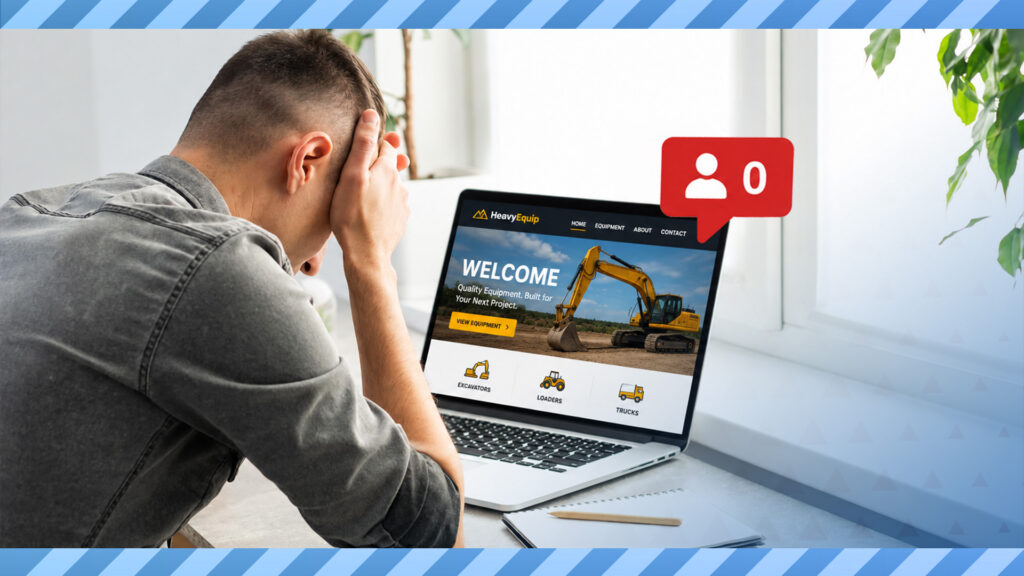
Do you have plenty of visitors coming to your website, but you’re not getting the calls or new customers you feel you should be? That gap is frustrating, and it’s easy to assume the problem is your website itself. Sometimes that’s true, and sometimes it isn’t. Before you rebuild anything, it helps to figure out exactly where visitors are dropping off and why, because a septic, sewer, or excavation company that fixes the wrong problem usually ends up back here again in a few months, having spent time and money without solving anything.
Let’s walk through where to look first.
Is the Problem Traffic, or Is It the Website?
There’s a difference between simply not showing up when people search, which means you miss out on the visitor entirely, and getting the visitor but failing to get them to call or fill out a form. We call those meaningful actions “conversions,” and which situation you’re in changes what you need to fix.
If your business barely shows up in Google Search or Google Maps when someone searches for septic, sewer, or excavation work in your area, that’s a visibility problem, not a conversion problem.
When people are already landing on your site, whether from ads, organic search, or a link you handed out, and they’re leaving without calling or filling out a form, that’s a different problem. The traffic is working. The website is what’s falling short.
That’s the situation this post is about: people are getting clicks, but not converting into calls, forms, or booked jobs.
Check Whether People Can Take the Next Step
Often, one small thing is getting in the way.
Start by checking whether your phone number is easy to find. It should show up near the top of every page instead of buried in a footer nobody scrolls to. If someone has to hunt for a way to reach you, most won’t bother. They’ll just call the next name on the list.
The same goes for your contact form. A long form asking for more information than a homeowner or property owner wants to give before they’ve even talked to you will cost you inquiries. Keep it short: a name, a phone number, and a line about what they need.
A lot of contractors underestimate how much mobile use affects this. Many of the people searching for septic, sewer, or excavation help are doing it from their phone, often during a stressful moment like a backup or a failed system. If your site is slow, hard to tap through, or doesn’t display correctly on a phone, you’re losing people before they ever see what you offer.
Make Sure Your Messaging Answers the Right Questions
A visitor who lands on your site is usually trying to answer three questions fast: does this company do what I need, do they work in my area, and can I trust them?
If your site has one general “services” page trying to cover pumping, inspections, repairs, installation, and excavation work all at once, it’s harder for a visitor to confirm you handle their specific problem. Service areas work the same way. If your website doesn’t clearly say where you work, someone outside your main city may assume you don’t cover them and move on to a competitor who made that easier to confirm.
Trust plays a role here too. Septic and excavation work often feels urgent, expensive, or unfamiliar, so reviews, photos of real work, and clear information about your business all help someone feel confident enough to reach out instead of comparing you against two more companies first.
Sending Paid Traffic to the Wrong Page Can Kill Conversions
If you’re running Google Ads and wondering why your ads aren’t converting, the landing page is often the issue rather than the ad itself.
Sending paid traffic to your homepage instead of a page built around the exact service someone searched for creates extra work for the visitor. They clicked on an ad for septic tank installation, and now they’re stuck scrolling through a general homepage trying to find that information themselves. Some will do it. Many won’t, and that gap shows up directly in your cost per booked job.
A dedicated landing page for each campaign, one that matches the ad’s message and gets straight to the point, usually converts better than sending everyone to the same general page.
What to Fix First
You don’t need to fix everything at once. Start with whichever of these matches what you’re seeing on your own site:
- If your phone number or contact form is hard to find, fix that first. It’s usually the fastest fix with the clearest payoff.
- If your site doesn’t clearly explain your services and service area, that’s next. Visitors shouldn’t have to guess whether you cover their situation.
- If you’re running ads and sending clicks to your homepage, build a dedicated landing page for that campaign instead.
- If your site looks outdated or loads slowly on a phone, address that before anything else, since it undermines trust before a visitor even reads your services.
Match the fix to where you’re losing visitors, and start there instead of guessing.
Turn Your Traffic Into Booked Jobs
Getting traffic to your website is only half the work. The other half is making sure that traffic turns into calls and booked jobs once it arrives.
Dig In Digital works with septic, sewer, and excavation contractors to build professional websites made to turn visitors into customers, not just numbers on a traffic report. If you’re not sure whether your current site is helping or holding you back, we can take a look and tell you plainly what we’d fix first.
Contact Dig In Digital for a website review.